Federico Intelligence
Buying & Acquisition · 18 min read
Anatomy of a Deal: The Cabo 40 — The Deal That Wasn't a Purchase
He came in set on a 35 and bought a 40. But the strangest part is what "bought" means: no purchase-and-sale agreement at all — the boat was owned by a nonprofit, held under a lease with an option to purchase. This is how that deal actually worked.
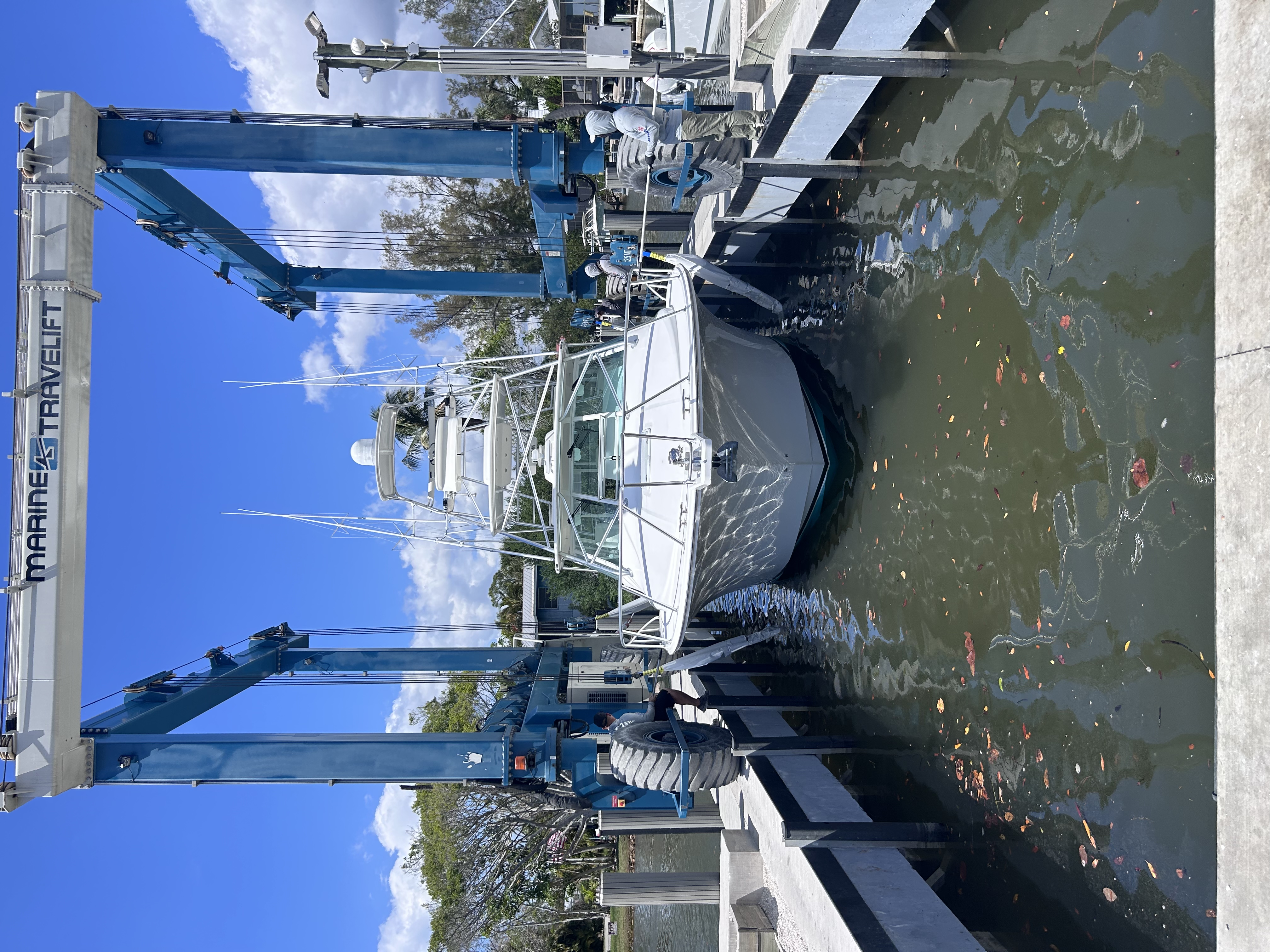
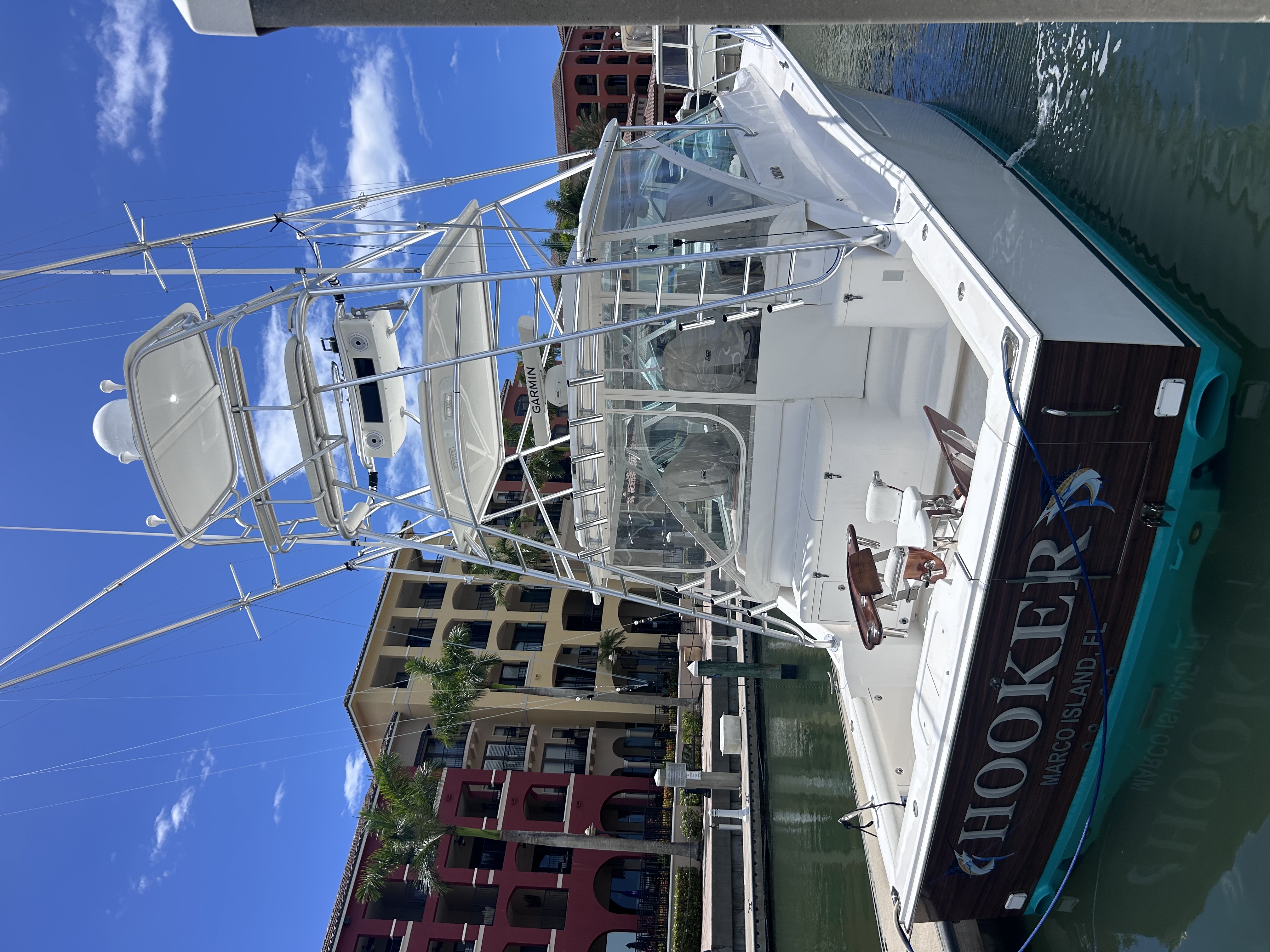
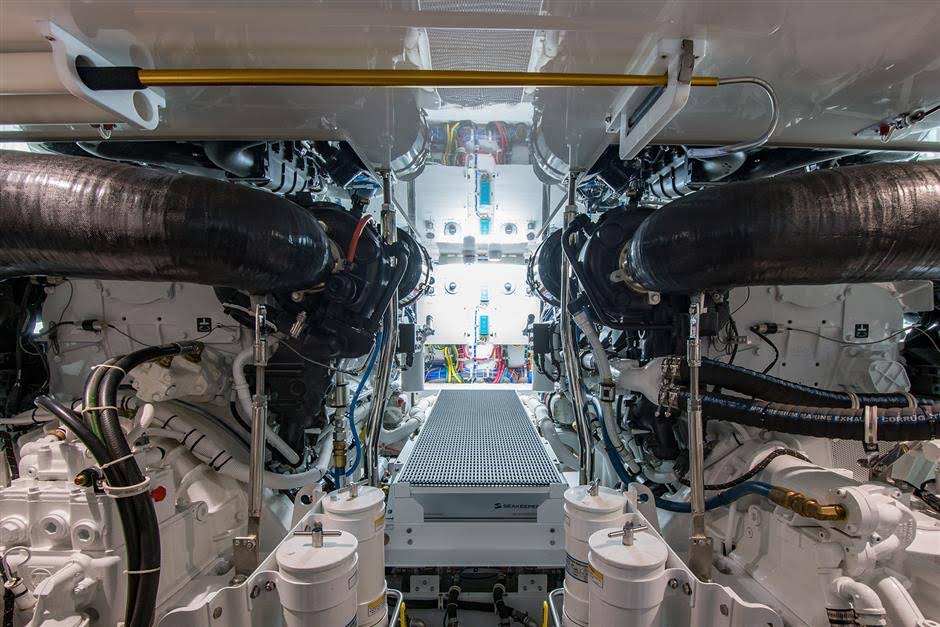
The boat was a 2008 Cabo 40 Express named Hooker — a tournament-class diesel express sportfish, twin MAN 800-horsepower diesels, a welded aluminum tuna tower, and an earned reputation in the offshore world. She lay in Panama City, Florida, roughly 400 miles from the buyer's home waters in Southwest Florida. I represented the buyer through Worldwide Yacht Sales, the brokerage of record.
The buyer did not start out looking for her — nor as a brokerage client at all. He was a detail client of mine for about two years first: I knew his boat before I knew his plans. When the brokerage conversation came, it was two in one — sell his current boat, a 2024 World Cat 295 center console, and find him a 35-foot Cabo Express sportfish, or something along those lines.
He was no novice: an experienced boater — a career commercial airline pilot, among a multitude of other careers — who had owned other boats and been aboard bigger ones. This was to be his largest purchase, though: a step up from a roughly 30-foot center console into the diesel express sportfish class, and his first time buying through a brokerage, having always bought new, direct from a dealer. Our first conversation was as much education as brief — what representation looks like, how the process runs.
He came in set on the 35, and he held that view confidently. What he described wanting, across our conversations, was something else — and noticing that gap is where this deal actually began.
The Brief Was Right; The Assumption Was Wrong
Listen to what the buyer kept describing: extended fishing trips — long runs out to Pulley Ridge and back, down through the Keys, and over to the Bahamas. Room and comfort for his whole family while he fished. And one specific, strongly held concern — draft. He believed that taking a boat over 35 feet on those runs meant draft trouble, because a bigger boat necessarily drew more water. It sounds right. It is often approximately right.
It was wrong about the specific boat: the 2008 Cabo 40 Express drew about three feet five inches — hull form and running gear vary enormously between builders and models. Once that objection was tested against the actual specification instead of the general rule, everything else he had described pointed the same direction.
That shift took about a month of searching and showings, and I did not argue him out of anything. I kept showing him the 35s he had asked for — and peppered in 40- to 45-foot boats alongside them, so he could see what the same money bought one size class up. The comparison did the work: a larger boat, at a similar price point, that still drew under four feet of water. Fuel capacity and range for Pulley Ridge and the Bahamas, family comfort underway and on station — everything he kept describing pointed at the bigger boat. And when the right 40 surfaced, she carried the engine package he wanted, a layout that worked, and updated electronics — boxes the 35s never checked.
Federico Perspective
The lesson is not that brokers know better than buyers. A buyer's stated mission usually contains the answer — the job is noticing where the mission and the assumption disagree. He would have found a perfectly good 35 — the wrong boat.
The Search, and the Listing That Didn't Fit the Pattern
The search ranged widely before it narrowed: Tiaras, Cabos, Vikings, Hatteras — across showings and a constant back-and-forth by email, text, and phone. I even showed a few enclosed flybridge models — a different style from the express — so the comparison stayed honest. The other serious candidates fell the way used boats so often fall: the boat in the photographs and the boat at the dock were two different boats, condition drastically different in person, and none as updated as the boat we ultimately bought.
Hooker surfaced in an online listing, and she did not fit the pattern: photographs, hours, location all right — but listed at $399,000 while comparable boats of her year, make, and model listed $100,000 to $200,000 higher. A price like that is not a bargain until you can explain it. It is a question. We asked it — why is this one priced this way? — and dug.
Then We Found Out Who Owned the Boat
Here is where this deal left the standard script.
Hooker was not owned by a private seller. The owner of record was AMIkids, Inc., a nonprofit, which had received the vessel by Deed of Gift in March 2025 — she had been donated. AMIkids had then placed her under a Lease Agreement and Option to Purchase dated July 11, 2025, with a prior lessee. So nobody could simply sell us the boat. What was available was the lessee's position: the lease, and with it the option to purchase the vessel at the end of the term.
Plainly: it was the first lease reassignment I had ever handled, and the first sale I had worked in which the owner of record was a nonprofit. A learning curve — and I climbed it before I ever took my buyer to the boat. Learning it was my job, done in advance: my team at Worldwide helped me frame the questions, and I had the listing broker walk me through the mechanics, until I could explain the whole position in plain language. Explained that way, it came down to this: a payment to the lease holder up front, and the remaining balance of the price spread across the remaining lease term, with the purchase option at the end of it. The buyer was open to it. I never saw the structure as a deal-killer — I saw it as an opportunity with more hoops in it: more steps, more filings, more things done properly and in the right order.
That is the structure the buyer ultimately took. On March 19, 2026, the parties signed an Assignment and Assumption of Lease Agreement and Option to Purchase, effective March 20, 2026. The prior lessee transferred all of his rights under the lease — including the purchase option — and the buyer assumed every lessee obligation from March 20 forward, "as is, where is, with all faults."
The obligation he stepped into was specific, and it was on paper before anyone signed: 29 monthly payments of $3,100 running through July 2028, plus a single $89,900 amount due July 11, 2028 — $179,800 in total remaining obligations attached to the position he acquired, with the purchase option at the end of it. AMIkids consented to the assignment and accepted him as lessee. The prior lessee remained responsible for everything before the effective date; everything after it belonged to the buyer.
Key Takeaway
In a conventional deal you buy a boat. In this deal the buyer bought a position — a lease, a payment schedule, and an option — and the boat came with it. Structures like this are not reasons to walk away. They are reasons to change what your diligence has to prove.
In an Assignment Deal, the Paper Trail Is the Diligence
Because there was no conventional purchase-and-sale agreement, there was no conventional closing file — no deposit receipt, no closing statement, no bill of sale. The paper trail had to carry weight it does not normally carry.
The USCG Abstract of Title was pulled on February 10, 2026 — before the survey — and it told the boat's whole recorded life: built by Cabo Yachts in 2008 and originally named Catch 22, renamed Salty in 2012, transferred by Deed of Gift to AMIkids in March 2025, and renamed Hooker that October. The recorded chain showed bills of sale and the deed of gift — and, most importantly, no mortgages or liens of record. On a documented vessel changing hands through a nonprofit's lease program, that clean abstract was no formality; it was the foundation the assignment stood on.
The assignment itself was explicit about risk: the buyer took the vessel as-is, with an express acknowledgment that he had been given the opportunity to survey and test-run her first. Which is why the next section mattered — the survey was not a negotiating instrument in this deal. It was the buyer's only real protection, and he knew it before he signed.
The Surveys Carried This Deal
We drove up together — the buyer drove, I rode with him — straight to Panama City after I finished work the day before, a night in a hotel, and down to the dock first thing in the morning, coffee in hand at 8:30, the surveyor already there waiting. February in the Panhandle cooperated: a chilly morning that gave way to sun and clear blue skies.
My first ten minutes aboard were the pass I make on any boat of her age: paint and hull condition first, then the corners — where problems hide — for crazing and cracking, and any obvious corrosion or pitting on a 2008 boat. She was in very good shape for her year and use, and the interior was a genuine surprise: exceptionally clean, woodwork in fine shape, no water damage anywhere, every hatch working. Against that, the file's one soft spot: service records thinner than I like on a boat of her age. A survey is a snapshot; on an older boat the service history is the other half of the diligence — remember that at the engines.
On February 24, 2026, the boat was surveyed afloat at Bay Point Marina in Panama City, hauled at Miller Marine, and run on a sea trial in St. Andrews Bay. The evidence came in three layers: a hull survey, a standalone mechanical report, and a laboratory oil analysis. Each layer answered a different question, and this deal needed all three.
The machinery survey
Middleton Marine performed the mechanical inspection and issued its own report. Two professionals worked the boat that day — the marine surveyor on hull and systems, a MAN-certified mechanic on the machinery, taking the readouts and the oil samples — with the buyer and me aboard, and Roger Barnhart of Galati Yacht Sales, the listing agent, running the boat for the sea trial. The MAN engines' hours were read from the helm displays and photo-documented: 950 hours port, 953 starboard. Underway, both engines turned 2,343 and 2,346 RPM against a rated maximum of 2,300, making 42.1 mph — an older diesel that still pulls past its rated RPM is telling you something good about its health. No leaks, no overheating, no oil-pressure anomalies. The Westerbeke generator passed a full load test. The report's verdict was plain: the boat was mechanically in very good condition, with everything performing within manufacturer specifications.
It carried one caveat that mattered: there was no clear record of the required MAN maintenance having been performed, and the surveyor prescribed catching up the past-due maintenance. When the paperwork cannot prove an engine's history, the proof has to come from somewhere else — and on this deal, it did.
The alarms — and how a finding gets closed
The day had already offered one small warning at the dock — a low-battery alarm, sorted out quickly, and of a piece with what the surveys would note about the batteries and charging system. Then, during the trial run, three engine alarms were recorded, and the deal summary flagged them as the primary wildcard — the one item that could have pushed costs into worst-case territory. But a wildcard is a question, and questions can be chased. The mechanical report identifies each alarm individually, and every one of them was a sensor fault, not a mechanical one:
Port engine: a fuel pressure sensor error during the trial. Starboard engine: an air inlet sensor alarming intermittently. Starboard engine: an intermittent coolant-pressure expansion-tank sensor error.
The prescribed remedy for all three was the same: troubleshoot and replace the sensors. The report's remaining machinery items were the honest wear of a working boat — coolant found at mostly-water concentration in both main engines and running low in the generator, a broken control-breaker hold-down tab, aging raw-water hoses to monitor, rusting clamps to replace. Nothing on that list is an engine coming apart. But sensors can lie in both directions — an alarm with an innocent explanation still leaves a fair question: what is happening inside the engines, where no inspection can see? That is what the third layer existed to answer.
The hull survey
Mosley Maritime Services (Report 26-3272) rated the vessel Above Average for her age: structure sound, moisture readings dry, no grounding or impact damage, interior exceptionally clean. Fourteen findings, in the surveyor's own tiers:
Safety (4): the hull identification number was covered at the transom; LEDs out in the green navigation light and the white stern light; the fixed fire-suppression system carried no current inspection tag. Systems (3): the port engine's raw-water intake seacock was inoperative; the galley refrigerator was not cooling; the helm VHF would not power on. General (7): corroding hose clamps, two cut bonding wires, a leaking baitwell drain valve, a cycling VacuFlush head, paint flakes in the forward bilge, an inoperative horn, and a fouled cockpit locker drain — plus surveyor's notes any Cabo buyer will recognize, including the stress cracks at the forward cockpit corners that are typical of these boats and, here, of no structural concern.
Sorted that way: nothing structural, nothing that stops a closing, a short list of safety items to correct immediately, and engine alarms already traced to their sensors. A survey is not a pass or a fail. It is the document that turns a price into an informed one.
The oil analysis
Oil samples were drawn from both engines and both ZF 325-1A gears on trial day and sent to Thompson Tractor's fluids laboratory under the Cat S.O.S. program. The reports came back on February 27, 2026 — three weeks before the assignment was signed. Of the four samples, three returned "No Action Required": the starboard engine clean across the board, and both gears normal, their elevated copper readings expressly attributed by the lab to harmless leaching rather than wear.
The fourth sample — the port engine, at 950 hours — came back "Monitor," and it is worth treating straight, because this is what a real finding looks like. Iron read 31 ppm and lead 12 ppm, elevated on a first sample. That is a flag, and we treated it as one. But the pattern around it was empty exactly where damage would have left signatures: no water, no antifreeze, no fuel dilution, and none of the companion metals that accompany bearing failure, piston damage, or ring wear on either engine. The mechanic's interpretation was specific and mechanical: iron from thin rust formed on the cylinder-liner walls while the engine sat dormant, wiped off by the rings on start-up, and lead from solder leaching at the oil cooler's joints. The prescription matched it: change the fluids and filters, then resample at about 50 hours — with a second resample at 150 — to verify the trend falls.
That is what a closed finding looks like: a named cause, laboratory evidence against the bad explanations, a priced service plan, and a dated checkpoint to confirm the call. The sequence ran in the order it is supposed to run — alarms on trial day, the mechanical report naming the sensors, the laboratory clearing the internals, and the buyer signing in March with the follow-through already scheduled. The wildcard had been chased to ground before his name went on anything.
One thing the documents don't show: the drive home. That day ranks among the cleaner, smoother sea trials I have been part of, and the buyer felt the same — we got food, pointed the car at Naples, and left Panama City in a genuinely positive frame of mind. The laboratory results, three days later, only confirmed what the day had suggested.
The Money Evidence Agreed With the Ask
The listing price was $399,000. The surveyor's independent opinion of fair market value came in at $402,000 — the appraisal essentially landed on the ask, supported by four comparable 2007–2008 Cabo 40 sales. In most deals that is a footnote. In this one it mattered: the buyer was assuming a defined schedule of obligations rather than negotiating a bill-of-sale price, and independent evidence the boat was worth its number was load-bearing.
My post-survey planning figures — prepared for the buyer from the findings — were equally plain: roughly $7,000 to address the findings conservatively, and a realistic planning budget of $10,000 to $15,000. My written assessment of the oil results put the catch-up service itself — fluids and filters throughout, the three sensors, cooling systems flushed and refilled at proper concentration, the past-due MAN maintenance brought current — at $10,000 to $14,000, squarely inside that range. The $20,000-or-more figure existed in the planning for exactly one scenario: that the alarms meant something internal. By signing day, the laboratory evidence argued directly against that scenario — the tail stayed on the page as a planning bound, but it was no longer the expectation. That is the complete financial picture the buyer signed against: a $399,000 boat, valued at $402,000, with $10–15K of known, itemized work and a 50-hour oil resample on the calendar to confirm the call.
And the price itself never became the fight. We paid the full ask — $399,000, start to finish, unchanged — and that was not a hard conversation. The appraisal was only part of the reason. These 40 Cabo Express sportfish are what I call legacy boats: somebody buys one, maintains her, holds her — then his kids get her, and their kids after that, boats that hold their value across decades because their owners keep them properly. At her condition and updates, $399,000 was justified — and both sides treated it that way.
The Table Had Three Sides
If the price never moved, the findings still had to land somewhere — and they were split, amicably. The selling side took, before closing: an oil-change service on both engines, the galley refrigerator made operational, and recertification of the fixed fire-suppression system — several required by the buyer's insurer before the policy could bind. The buyer absorbed the rest: the sensor replacements, the cooling-system service, the past-due MAN maintenance — the catch-up plan already priced above. A little given on each side, and both sides working to close it, not to win it.
The hardest part of the negotiation was never a number. A normal deal has two sides; this one had three — buyer, selling side, and a nonprofit whose consent the structure required. Those added layers of communication were the hardest part of the entire process, harder than any finding on either survey.
Closing Was a Sequence, Not a Signature
The "closing" in an assignment structure is a sequence of consents and coverages landing in the right order. The tense part of the final sequence was insurance — not whether it could be bound, but what it would allow. The navigation limits that came with the lease and the initial coverage would have held him to roughly 150 miles near shore; the grounds he had bought the boat to fish put him 200 to 250 miles out. A policy drawn that way would have insured the boat and defeated the mission at the same time, so the territory had to be scrutinized and corrected before the coverage bound. Layered over it was the three-party paper chase of the final days. Nothing dramatic. All of it had to land in order:
February 10, 2026 — Abstract of Title pulled; clean chain, no recorded mortgages. February 24, 2026 — Survey and sea trial completed in Panama City; oil samples drawn from both engines and both gears. February 27, 2026 — Oil analysis reported: starboard engine and both gears clean; port engine flagged "monitor," with a fluid change and a 50-hour resample prescribed. March 11, 2026 — The buyer's insurance was bound, with the insured hull value at $399,000 and AMIkids named as loss payee — a requirement of the lease structure, not a courtesy. March 19, 2026 — The assignment was signed by all parties. The same day, an insurance endorsement removed the port-risk restriction that had initially confined the boat to Esplanade Marina in Marco Island. March 20, 2026 — The assignment took effect. A second endorsement added Bahamas navigation coverage — effective the same day the buyer took the position, for the exact mission he had described from the first conversation.
Read that sequence again and notice what it teaches: in an unusual structure, nothing is decorative. The loss-payee designation, the endorsement dates, the consent — each one existed because the structure required it, and the deal closed when the sequence completed, not when a single document was signed.
Federico Perspective
Unusual paperwork does not make a deal fragile. Unread paperwork does. Every document in this file was read against the structure it belonged to — and because it was, a deal with no purchase agreement in it closed cleaner than many that have one.
The Paperwork Delivered Her
She lay in Panama City; her insured home became Esplanade Marina in Marco Island, some 400 miles of repositioning away, with the navigation restrictions lifted and Bahamas coverage in force from the effective date. The handover artifact was mine: a 22-page Owner Orientation Guide I prepared for the buyer — operating notes, MAN ownership habits, departure and shutdown checklists, spares, and the Bahamas material. I wrote it because he was stepping up into a different order of machinery, and I wanted everything the surveys, the trial, and the file had taught me about her in his hands from day one. A proactive handover. On a boat of this complexity, taking the position is only half the transfer. The other half is knowing the vessel.
The delivery was the buyer's own production; my part was setting it up, not running it. He flew up with a hired delivery captain in a friend's airplane — the friend flies, and is a boat mechanic besides, and stayed until he was satisfied she was ready to move. They left the dock early in the afternoon, around one or two o'clock — into a small craft advisory, high winds and all, by the owner's election. If you are going to find out how a boat handles, that is one way to do it. They ran offshore, as straight a line as the coast allows, to Venice through the night, fueled at first light, and ran on to Marco in better conditions. She tied up at Esplanade Marina late the following afternoon — a little over twenty-four hours, Panama City to Marco Island, on her own bottom. The delivery captain gave the buyer a proper orientation underway on the run down; mine, on paper, was waiting for him at the dock.
Representation does not end at the signature — on this deal there barely was a signature to end at — so the work continued until the buyer held the boat, the coverage, and the knowledge to run her.
What Happened After
The deal did not end at the dock in Marco, and neither did the boat's list. Since taking her over, she has been gone through with a fine-tooth comb, and the service regime since has been extensive and meticulous — I check in regularly, and he reports on her the way a pilot reports on an airplane. The catch-up work the diligence predicted: done. Electrical issues run down; items replaced on the engines and the generator; the prescribed oil sampling folded into the regime. The last gremlin was the charging system: a replacement charger that itself failed, the system reworked, the fault found. She is running well.
And because he had trusted me on both sides of his boating life that year — selling his World Cat, buying this boat — I marked it the way it deserved: a closing gift package built around the boat herself. A custom leather cup holder with stainless holders bearing her name; a dock mat with Hooker on it; a boarding mat for the cockpit gunwale; a custom cutting board mounted on boat cleats, her name on it; and a custom filet knife. We talk regularly. He is, in the plainest sense, a great client.
What This Deal Teaches
For buyers
Interrogate your own brief first. The most expensive assumption in this deal was not in the listing — it was in the buyer's head, about draft. Test the assumption against the actual boat before it eliminates the right one.
Ask who owns the boat — and how. Ownership structure determines what you are actually acquiring. A lease-and-option assignment can be a legitimate path to the right boat — but you are buying obligations and an option, not just a vessel, and your diligence has to match.
In an as-is structure, the survey is your only protection — fund it and heed it. There is no seller work list coming. Findings get priced, planned, or they become the reason you walk.
A finding isn't closed when it's noticed — it's closed when it's chased. The engine alarms could have stayed this deal's wildcard. Instead they were diagnosed to three faulty sensors, tested against laboratory oil analysis, priced into a $10,000–$14,000 catch-up plan, and given a 50-hour resample checkpoint. Alarm, diagnosis, laboratory, price, checkpoint — that is what finished diligence looks like.
Make the independent value opinion do work. When the economics run through a structure instead of a negotiated price, a surveyor's FMV opinion landing on the ask is real evidence you are not overpaying for the position.
Get all of the information up front, as early as possible. There is more than one way to acquire a boat, and a complicated structure, carefully assessed and plainly explained, can work in a buyer's favor. The discipline is to stay calm and get the information early — in your hands and in your broker's — so the decision is the soundest one you can make.
Treat communication as the load-bearing member. Nothing in this deal failed on substance; everything hard was coordination across three parties. Over-communicate, stay organized about the next step, and keep a grip on the deal's direction.
For anyone holding a boat in an unusual structure
Your paper trail is your marketability. A clean abstract — a recorded chain with no surprises — is what allowed a donated boat in a lease program to transfer smoothly. Whatever structure you hold a boat in, keep its documents as carefully as its engines.
Key Takeaway
This deal was not won on price, and it was not closed with a purchase agreement. It was won on fit — a brief read honestly, an assumption tested against a specification — and closed on structure: a nonprofit's lease and purchase option, assigned cleanly, on the strength of a title search, two surveys, a fluids laboratory, and insurance sequenced to the day. The boat was the answer to the mission. The paperwork was how he got her.
The Through-Line
From a confident brief for the wrong boat to an assignment on the right one, this transaction ran on the discipline I use in every deal: the mission outranks the assumption, the evidence outranks the reputation — and when the structure is unusual, the documents outrank everything. A Cabo badge will get a boat shown. Only the brief, the surveys, and the paper trail should get it bought.
I would not run this deal differently — and I am glad I trusted my gut when the mission and the brief disagreed: the 35 was the wrong boat for the man, and the 40 was right. He agrees, and she has spent the months since proving it. It was, all in, a heck of a deal — and a heck of a learning experience.
A note on sources: this case study describes a transaction I handled as a Florida licensed yacht salesperson through Worldwide Yacht Sales, the brokerage of record. Published from the deal file at the direction of the parties involved in my representation; the buyer, the prior lessee, and all other individuals are not identified, with the exception of the listing agent, who is named with permission.
Shopping an express sportfish — or any boat your assumptions might be steering? Begin a Private Yacht Search and let's test the brief before we test the boats.
Federico Yachts · Yacht Intelligence. Personal Representation. · captain@federicoyachts.com · +1 (239) 330-2505 · FedericoYachts.com
Private Yacht Advisory
Make the Next Decision With Better Information.
Whether you're buying, selling or evaluating your next move, Federico Yachts brings transaction experience, market intelligence and hands-on vessel knowledge to the decision.
Continue Reading
Related Insights
The Yacht Buying Process: From First Search to Final Closing
The Asking Price Is Not the Market: How Yachts Are Actually Valued
Sea Trial vs. Survey vs. Mechanical Inspection