Federico Intelligence
Surveys & Due Diligence · 8 min read
Understanding Yacht Surveys: What They Find, What They Miss, and How to Read One
A survey isn't a pass-or-fail report. Learn how to interpret findings, identify open-ended liabilities, distinguish serious issues from routine ones, and understand what a survey can — and cannot — tell you.
Most buyers treat the survey as the moment they find out whether the boat is good.
It is not that, and expecting it to be that causes two opposite mistakes. Buyers panic at findings that are routine, and they accept findings written in language that sounds bounded and is not. Both mistakes cost real money, and both come from not understanding what the document in front of them actually is.
A survey is one qualified person, on one day, looking at a boat that has been in service for years. It is the most useful tool in a purchase and it has structural limits. This brief is about reading one properly.
What a Survey Is For
A marine survey establishes condition and identifies deficiencies at a point in time. It serves three audiences at once, which is part of why it reads the way it does.
The buyer, deciding whether to proceed, and at what price.
The insurer, deciding whether to bind coverage and on what conditions.
The lender, if there is one, deciding whether the collateral supports the loan.
That last pair matters more than buyers expect. Some findings are not negotiating material at all — they are conditions of the transaction happening. An underwriter will not bind with an expired fixed fire-suppression certification or missing required safety equipment, regardless of how the buyer and seller feel about it.
Choosing the Surveyor
The single most important decision in the diligence process, and the one buyers most often hand off.
Engage your own. Not the seller's, not the listing broker's recommendation accepted without thought. The surveyor works for whoever hired them, and you want that to be you.
Accreditation matters, and so does familiarity with your specific type of vessel. A surveyor who works primarily on sailing yachts is not the right choice for a diesel sportfish, and one who rarely sees outboard-powered catamarans will miss things a specialist would catch immediately.
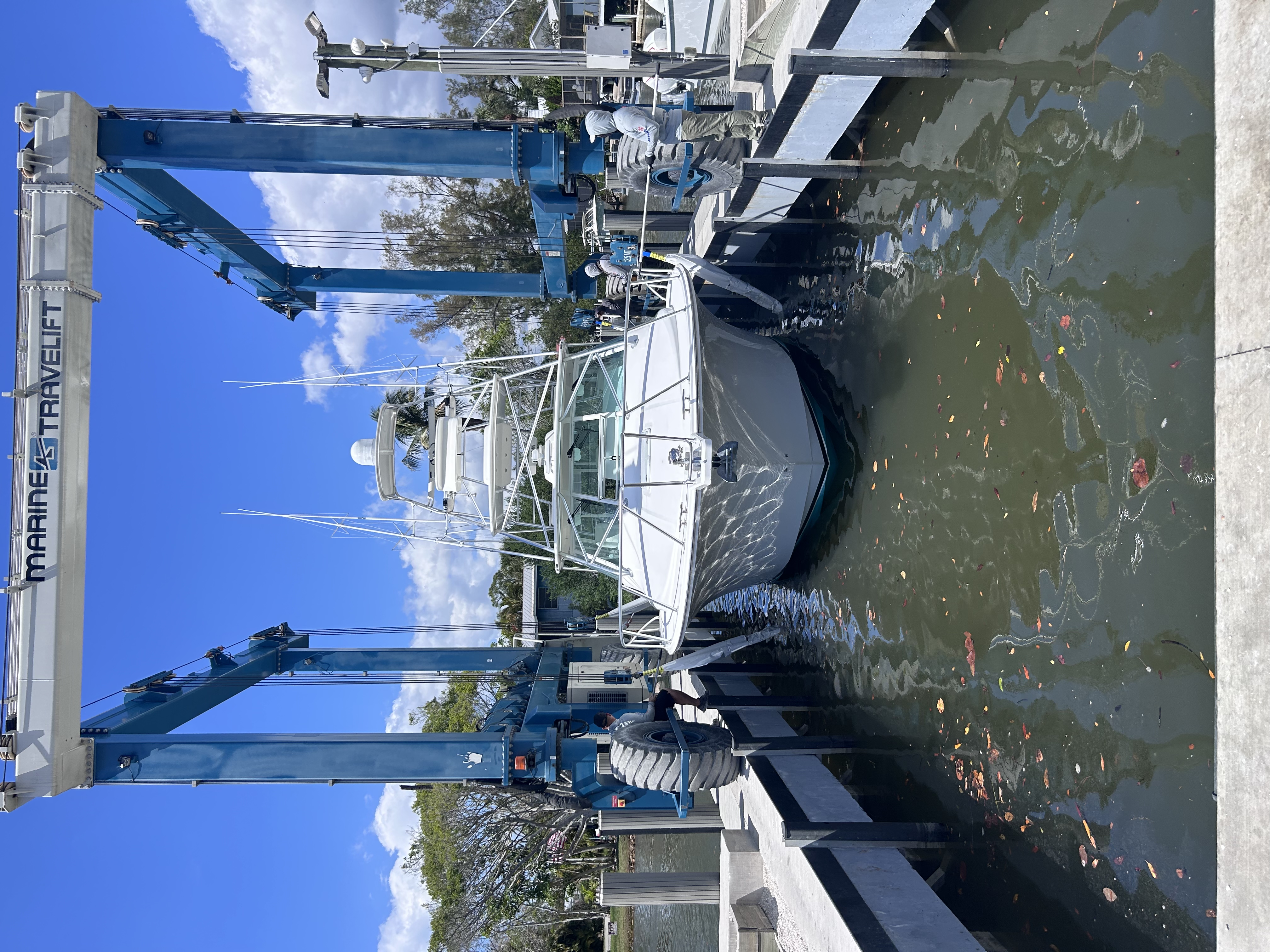
Then attend. Be at the haul-out. Be on the sea trial. A report read three days later is a summary of a day you should have witnessed. Findings that take a paragraph to explain in writing take ten seconds when the surveyor can point at the thing.
Questions to ask a surveyor before hiring
How many of this type and size have you surveyed in the last year? What is and is not included — do you open panels, take moisture readings, sound the hull? Do you attend the sea trial, or is that separate? What is your turnaround on the written report? Do you carry errors and omissions coverage?
How a Report Is Structured
Most reports sort findings into tiers, and the tiers carry different weight even when the language looks similar. In practice you are looking at four categories:
Safety and regulatory items. Required equipment, fire suppression, flares in date, placards, certifications. Non-negotiable, and typically what insurance conditions on.
System deficiencies. Things that are not working correctly — a pump, an alarm, a charger, a seacock that will not turn.
General findings. Wear, deterioration, deferred maintenance, items approaching the end of service life.
Observations. Notes on condition that are not defects, but that a buyer should understand.
Read the tiers, but do not stop there. The tier tells you how the surveyor classified something. It does not tell you what it will cost.
The Most Important Thing on the Page Is the Verb
This is the part I want buyers to take away above everything else.
Survey language is careful by necessity. A surveyor who cannot determine the root cause of something in a single day will write what they can defend — and what they can defend is a recommendation to investigate further.
Key Takeaway
Any finding written as diagnose, troubleshoot, monitor, investigate further, or replace as needed is an unpriced liability. It is not a defined cost. It is an open question, and you inherit it at closing unless it is closed before.
Here is what that looks like in practice.
On a 2008 Cabo 40 Express I handled for a buyer, an intermittent control alarm was logged during the sea trial. The recommendation was to troubleshoot and replace as needed. Read quickly, that sounds like a sensor — a few hundred dollars and an afternoon.
After closing, the alarm would not clear. The cause turned out to be the ECU and a connector, and components had to be replaced. That cost landed entirely on the buyer.
Nobody behaved badly. The surveyor recorded what he observed and wrote what he could support. The seller cleared the items insurance required and the boat sold at full asking price, because the comparables supported it. The buyer knew about the alarm and proceeded with his eyes open.
The lesson is not that surveys miss things. It is that the survey caught it and could not size it, and a buyer who reads "as needed" as "minor" has made an assumption the document never offered.
Buyer Beware
Intermittent faults are precisely what a one-day inspection is worst at. If something appeared once during the trial and did not repeat, that is not reassurance — that is the definition of the problem.
Findings That Look Alarming and Usually Are Not
The opposite error is just as common, and it kills deals that should have closed.
On that same boat, oil analysis on one engine came back showing elevated iron and lead. In isolation that reads as serious wear, and a buyer looking at it cold would reasonably consider walking.
The surveyor's assessment was thin rust on liner walls from the boat sitting unused, plus solder leaching from an oil cooler — with a recommendation to resample after a set number of running hours. That was the correct read, and the transaction proceeded.
This is why the interpretation matters more than the data. Oil analysis in particular is a screening tool designed to be read in trend rather than in isolation. A single sample from a boat that has been sitting is a starting point, not a verdict.
The Findings Nobody Reacts To
Meanwhile, the entry that actually predicts expense often draws no reaction at all.
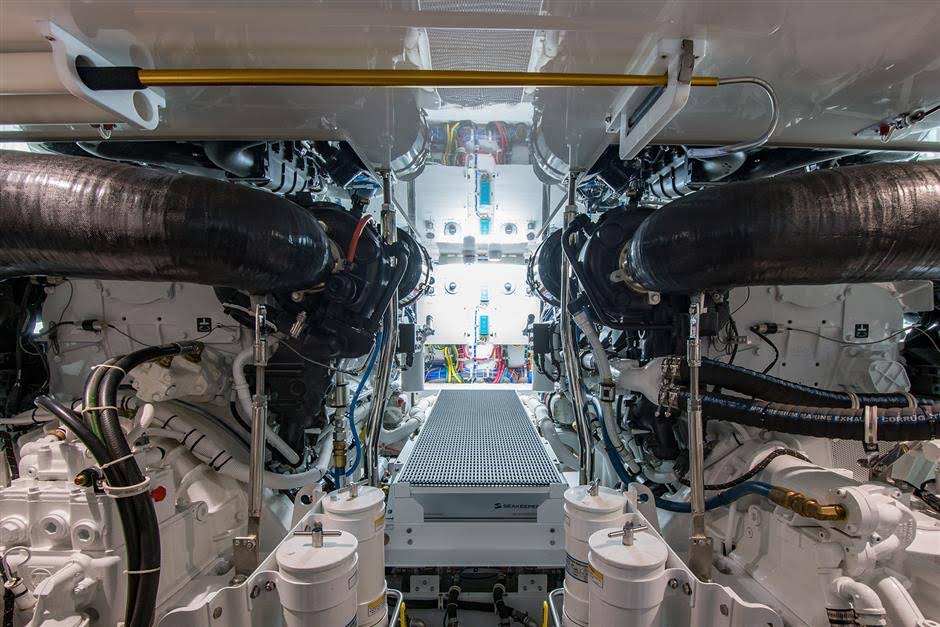
On the same survey, the coolant was substantially water, with no clear record that the manufacturer's required maintenance had been performed. Nobody panics at a coolant note. On large diesels, that is the finding I would want a buyer to genuinely understand.
The same applies to the surfaces. Bottom paint condition, blistering, moisture readings, corrosion at fittings and around dissimilar metals, the state of protective coatings — these are rarely urgent and they are not punch-list items.
Federico Perspective
Coatings and corrosion findings are forecasts. They tell you what ownership is going to cost, and roughly when. A note about bottom paint at forty percent of service life is a five-figure event with a date on it — and a buyer who reads it as cosmetic will be surprised by a bill that was disclosed to them in writing.
Working the Findings
Once you have the report, sort it yourself rather than accepting the surveyor's tiers as your action list.
Must be resolved before closing. Safety and insurance-binding items. These are not negotiations.
Material and quantifiable. Real defects with a knowable repair cost. These are legitimate negotiating material — repair by the seller, a credit, or a price adjustment.
Material and open-ended. The as needed category. The right move is to close them before closing if you can, by having the work diagnosed while the seller still has an interest in the deal completing. If you cannot, price the risk and decide deliberately.
Deferred maintenance and wear. Usually reflects the age of the boat and is already priced into the market. Asking a seller to deliver a fifteen-year-old boat in new condition is how a fair deal falls apart.
Cosmetic. Note it, factor it into your own plans, and generally leave it alone at the table.
A reasonable post-survey position addresses material findings. An unreasonable one reopens the entire negotiation, and can lose a correctly priced boat over items that were visible in the listing photographs.
What a Survey Is Not
Worth stating plainly, because buyers and sellers both over-rely on it.
It does not open up engines. It does not predict failure. It does not establish title or liens. It does not guarantee that a system working on Tuesday will work in March. And it does not replace a dedicated mechanical or engine survey, which is a separate engagement with a different scope.
Key Takeaway
A survey tells you what a qualified person could observe in one day. That is enormously valuable and it is not the whole story. Treat a clean survey as good evidence, not as a guarantee — and treat a survey with findings as information, not as a verdict.
If You Are Selling
Everything above is also the argument for preparing properly before listing.
Every deficiency your buyer's surveyor finds is negotiated at the moment you have the least leverage — under contract, with a buyer who now has a document supporting their position. The same item, addressed before listing, costs what it costs.
Prepare at least a week before survey day, not the night before. Two specifics worth knowing: do not change the oil immediately before a survey, because fresh oil raises the question of what the old oil would have shown; and make sure safety certifications are current, because those are the items that stop a closing rather than reduce a price.
The full seller's argument for preparation, pricing and presentation is covered in Selling a Yacht the Right Way.
A note on sources: survey examples are drawn from transactions I have handled; clients, sellers, vessels' owners and surveyors are not identified. Nothing here constitutes engineering or survey advice, and this brief is not a substitute for engaging an accredited marine surveyor.
Buying? A Private Yacht Search includes managing diligence — selecting the surveyor, attending the inspection, and translating the report into a position.
Federico Yachts · Yacht Intelligence. Personal Representation. · captain@federicoyachts.com · +1 (239) 330-2505 · FedericoYachts.com
Private Yacht Advisory
Make the Next Decision With Better Information.
Whether you're buying, selling or evaluating your next move, Federico Yachts brings transaction experience, market intelligence and hands-on vessel knowledge to the decision.