Federico Intelligence
Selling & Strategy · 9 min read
Selling a Yacht the Right Way
Almost every boat that fails to sell fails for one reason — the price — and sellers almost never believe it. A candid brief on preparation, pricing, presentation, qualifying buyers and evaluating offers.
Almost every boat that fails to sell fails for one reason, and sellers almost never believe it.
It is the price.
There are two things that complicate that statement, and this brief is largely about them. The first is that price and presentation fail in different ways, and sellers cannot easily tell them apart from where they sit. The second is that a seller's number is rarely a calculation. It is a position, arrived at emotionally, usually anchored to what they paid, what they have spent since, or what they need to buy next.
None of which makes the seller unreasonable. It makes the process one that has to be handled with evidence rather than argument.
Part I — Preparation
Work done before a boat lists returns more than the same work done after a buyer's surveyor has found it.
If a seller is going to spend money in only two places, I want them here:
A full mechanical and electrical inspection, and the maintenance it turns up. Not to produce a document for buyers — to know what is on the boat before someone else finds it. Every deficiency discovered by a buyer's surveyor is negotiated from a position of weakness, at a moment when the buyer has leverage and a deposit at risk. The same item, resolved before listing, costs what it costs and nothing more.
A professional detail. This is the single highest-return expenditure in preparing a boat for market, and the reason is not what most people assume.
Federico Perspective
A detail does not disguise condition. It reveals it. Oxidation comes off and you see what the gelcoat actually is. A degreased engine room means the next leak is visible rather than buried under years of accumulated grime. Buyers respond to a well-kept boat because the correlation is real — cosmetic care usually travels with mechanical care, and they know it. That is why presentation works. Not because it hides anything, but because it is evidence.
Beyond those two, preparation is a checklist exercise, and it should be done at least a week before any survey rather than the night before. A few items on that list are worth calling out because sellers consistently get them wrong.
Safety equipment is not housekeeping. Flares in date, life jackets and a life ring aboard, fire extinguishers and any fixed suppression system in current certification. These are not items a buyer negotiates. Insurance will not bind for a new owner until they are resolved, which means an expired suppression certificate is not a punchlist item — it is a gate the closing cannot pass through.
Do not change the oil the day before a survey. If the oil is over a year old or past a hundred hours, change it and then put hours on it. Fresh oil in front of a surveyor raises the question of what the previous oil would have shown.
Fuel filters and fuel age matter more than sellers expect. New elements before a sea trial help the engines reach rated RPM, and a boat that cannot make its numbers on trial day creates a problem that did not need to exist.
Clean the underbody and running gear before the trial. Fouling costs speed, and speed below published figures becomes a finding.
Part II — Pricing
Let the market teach
When a seller is anchored above the market, telling them they are wrong accomplishes nothing. They have heard it from someone with an interest in the outcome, which is how it will land regardless of whether it is true.
What works is evidence. Sold comparables of similar makes and models from the last six to twelve months — not active listings, which are only other people's opinions, but transactions that actually closed.
How that comparable analysis is actually built — and why asking price and market value are two very different numbers — is the subject of The Asking Price Is Not the Market: How Yachts Are Actually Valued.
If a seller still insists on a higher number, I do not refuse the listing. I list at their price and agree a review point in advance: if the boat has not produced meaningful interest within two to four weeks, we reduce — either to my number or to a midpoint between the two.
Seller Strategy
Agree the review trigger in writing, at listing, before the boat goes to market. A verbal understanding is made in a moment of optimism. When the review arrives and nothing has happened, that conversation becomes a confrontation about who was right. In writing, it is simply the plan you both made, arriving on schedule. Same conversation, none of the friction.
What overpricing actually costs
Not the sale, usually. The time.
I brought a 2025 Regal 38 SAV to market at the seller's insistence at $899,000. My read was $725,000–$775,000. Among other things, the boat carried around 400 hours — roughly four times what recreational use in that class typically accumulates, which is nearer 100 hours a year. It eventually sold at $775,000, the top of my range, but only after a period long enough that the seller had become frustrated with how long it was taking.
The same year, a seller wanted $315,000 for a 2024 World Cat 295 CC. I talked him to $295,000, still above where I thought it should start. It sold at $265,000.
Neither seller lost the sale. Both lost months, and both arrived at a number at or below where the evidence had pointed at the beginning.
Buyer Beware
A listing that sits accumulates days on market, and days on market is visible. Buyers and their brokers read it, and they read it as weakness. An overpriced boat does not simply wait patiently for the right buyer. It is actively teaching the market that something is wrong with it.
Part III — Presentation
What I do
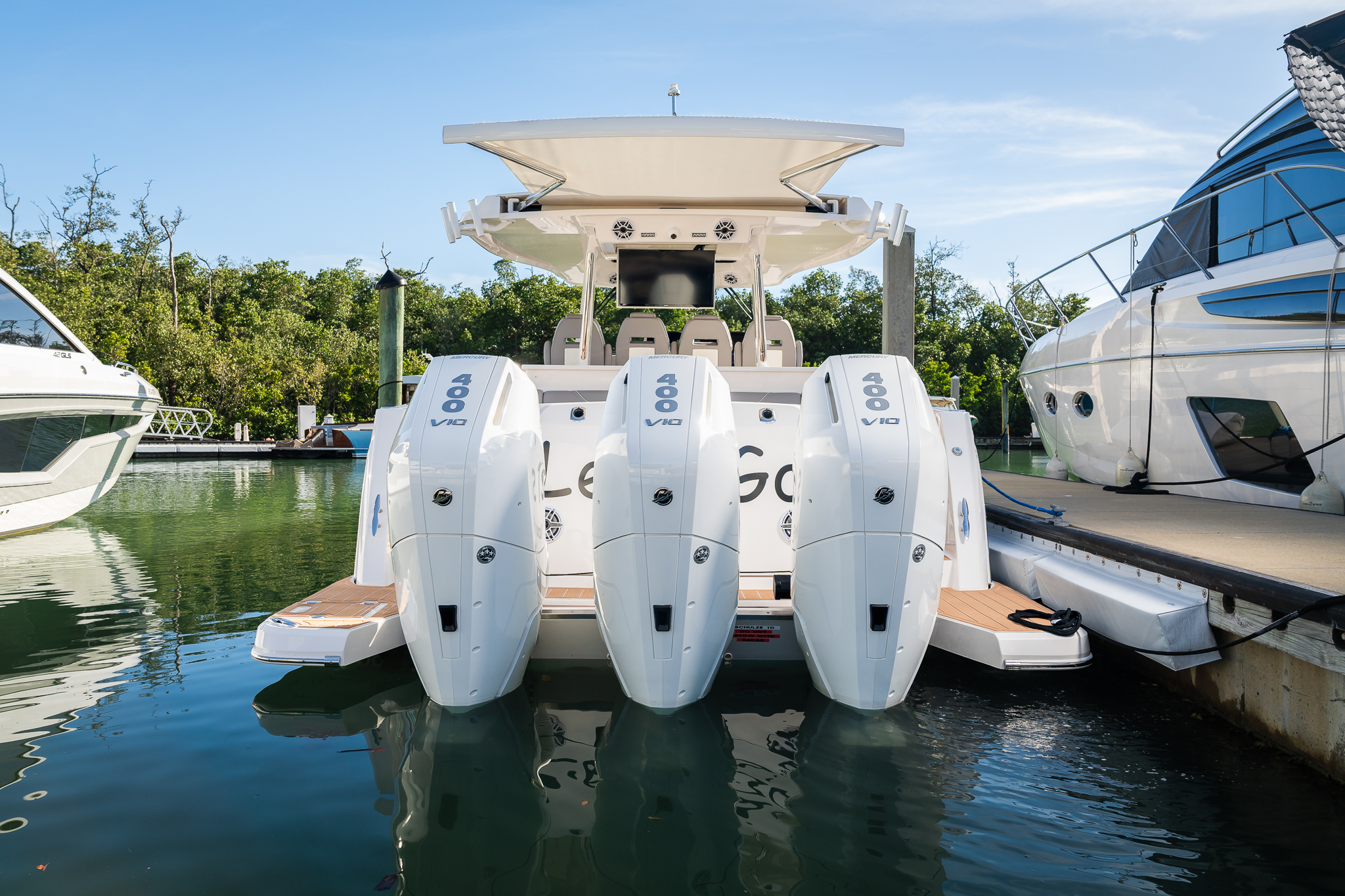
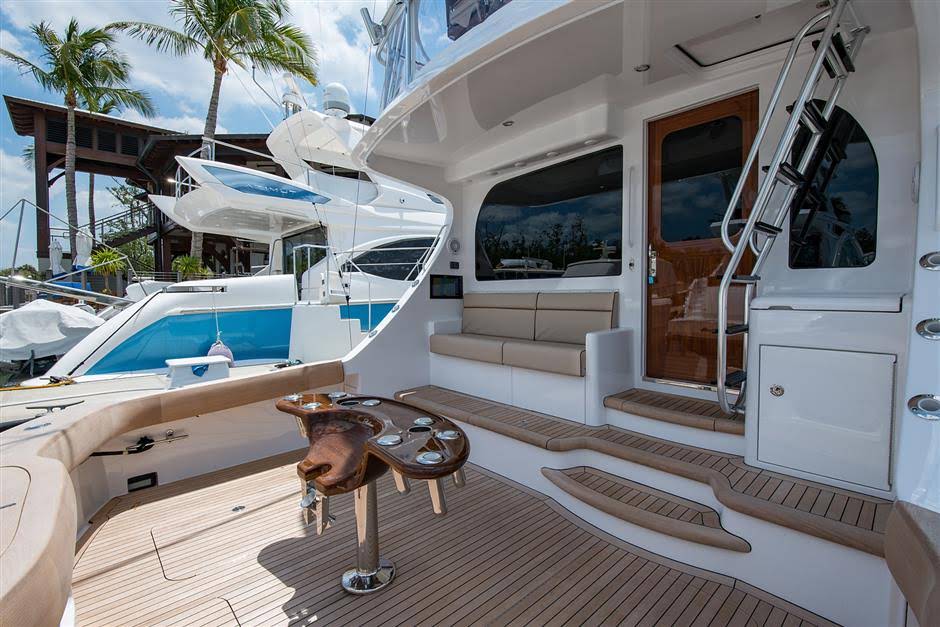
Every boat I list is freshly detailed. Immediately before the photography and video shoot, it gets washed down again, so the shoot starts from a clean canvas rather than a week of dust.
Then I check the places most brokers do not: hatch lids and rims, drains, corners, under seats — anywhere dirt collects and will show up in a photograph that someone otherwise spent real money to produce.
And the shoot is professional. The most common failure in this industry is a broker photographing a $400,000 boat on a phone and considering the job done. That is not a marketing decision. It is an absence of one.
What presentation actually does
Here is the distinction that matters, and it is the one sellers find hardest to see from where they are standing.
Price is what stops a boat selling once buyers are engaged. Presentation is what stops them engaging at all.
A badly presented boat does not generate low offers. It generates silence. Buyers do not call to explain that the photographs were poor — they simply keep scrolling. So a seller watching nothing happen cannot tell whether the number is wrong or the listing is, and will usually assume the former because that is the lever they know about.
Presentation also has to survive contact. Photography gets a buyer to the boat. What keeps them interested is the vessel in person matching what they saw online. A listing that oversells is worse than one that undersells, because the disappointment arrives at exactly the moment the buyer was preparing to commit.
Key Takeaway
Presentation does not raise the ceiling on what a boat is worth. It protects the number you set, and it determines whether anyone shows up to consider it.
Part IV — Qualifying Buyers
Below the largest transactions, a seller rarely gets to see a buyer's financials. Qualification is therefore a matter of judgment rather than documentation: where someone lives, what they do or did for work, how they talk about boats they have owned, what they are actually trying to accomplish. A broker who cannot tell a serious buyer from someone enjoying a Saturday after one phone call is going to cost their seller a great deal.
What an unqualified buyer costs is not primarily time.
It is the seller's confidence. A seller who blocks out a day, has the boat cleaned and fueled, meets someone at the dock, and then watches nothing come of it does not conclude that buyers are unpredictable. They conclude that their broker is not screening. Two or three of those and the relationship is damaged in a way that is difficult to repair.
Part V — Surveys, From the Seller's Side
I do not generally recommend that sellers commission their own survey before listing, unless they particularly want one. Proper preparation against a thorough checklist catches most of what a survey would find, at a fraction of the cost.
It is also worth being honest about what a survey is. One day, one sea trial, one set of eyes. It is a snapshot of a boat's life, not the whole story, and it does not always catch everything. That cuts both ways — it is the reason a seller should not assume a clean survey is coming, and the reason a buyer should not treat one as a guarantee.
When a buyer's survey does turn something up, the response depends on what it is.
Safety and insurance-binding items are not negotiations. Expired certifications, fire suppression, anything an underwriter will condition binding on — the seller resolves those, promptly, because the closing cannot happen otherwise.
Understanding how to read what a survey finds — and what its careful language actually means — is covered in Understanding Yacht Surveys.
Nearly everything else is negotiable, and there are three ways through: adjust the price, complete specific repairs, or hold the deal as-is. A modest price concession often resolves more than its dollar value, because it lets the buyer feel made whole and lets the seller acknowledge that preparation could have been better. All three are legitimate. The wrong move is to be slow or evasive, which converts a manageable finding into a question about the seller's good faith.
Seller Strategy
My job is to reduce risk to the seller and maximise their exit. Both are served by finding problems before a buyer does. Everything you resolve before listing is a repair. Everything a buyer's surveyor finds is a negotiation.
Part VI — Evaluating Offers
When a number arrives, I present it. I give an opinion when asked for one, and not otherwise. The decision belongs to the seller, and it should be made against what they are trying to achieve rather than against what their broker would do.
What is worth making explicit is that the highest number is not automatically the best offer.
An offer that arrives with altered terms, an extended closing, unusual contingencies, or a buyer whose ability to perform is uncertain can be worth less than a lower, cleaner one. Certainty has value. So does a closing date that suits the seller's own plans, particularly when they are buying something else and the timing has to work.
What This Comes Down To
Sellers tend to believe that the market will find the right buyer eventually, and that holding out costs nothing but patience.
It costs time, and time is not neutral. It accumulates days on market, it erodes the seller's own conviction, and it frequently ends at a number lower than the one the evidence supported at the start. Both of the overpriced listings described here sold — one at the top of my range, one below it — and both sellers spent months getting to a place they could have started from.
The work that protects a seller happens before the boat goes to market: knowing its condition, presenting it honestly and well, pricing it against what has actually sold, and agreeing in advance what happens if the market disagrees.
A note on sources: transaction examples are drawn from listings I have handled; clients and sellers are not identified. Figures reflect those specific transactions and are not representative of any particular boat's value. Nothing here constitutes legal, tax, insurance, engineering or survey advice — engage the appropriate specialist for each.
Considering selling? A Private Market Analysis begins with what has actually sold, not what is currently listed.
Federico Yachts · Yacht Intelligence. Personal Representation. · captain@federicoyachts.com · +1 (239) 330-2505 · FedericoYachts.com
Private Yacht Advisory
Make the Next Decision With Better Information.
Whether you're buying, selling or evaluating your next move, Federico Yachts brings transaction experience, market intelligence and hands-on vessel knowledge to the decision.