Federico Intelligence
Due Diligence · 8 min read
Sea Trial vs. Survey vs. Mechanical Inspection
Three inspections. Three different purposes. Buyers routinely treat them as one event — and each one has a blind spot the others are supposed to cover.
Buyers routinely treat these three as one event. The boat comes out of the water, somebody runs it, somebody writes a report, and that is diligence.
They are three different engagements with three different scopes, and each one has a blind spot the others are supposed to cover. Understanding which is which is how you avoid paying for overlapping work while leaving an actual gap unexamined.
What Each One Is Actually For
The marine survey
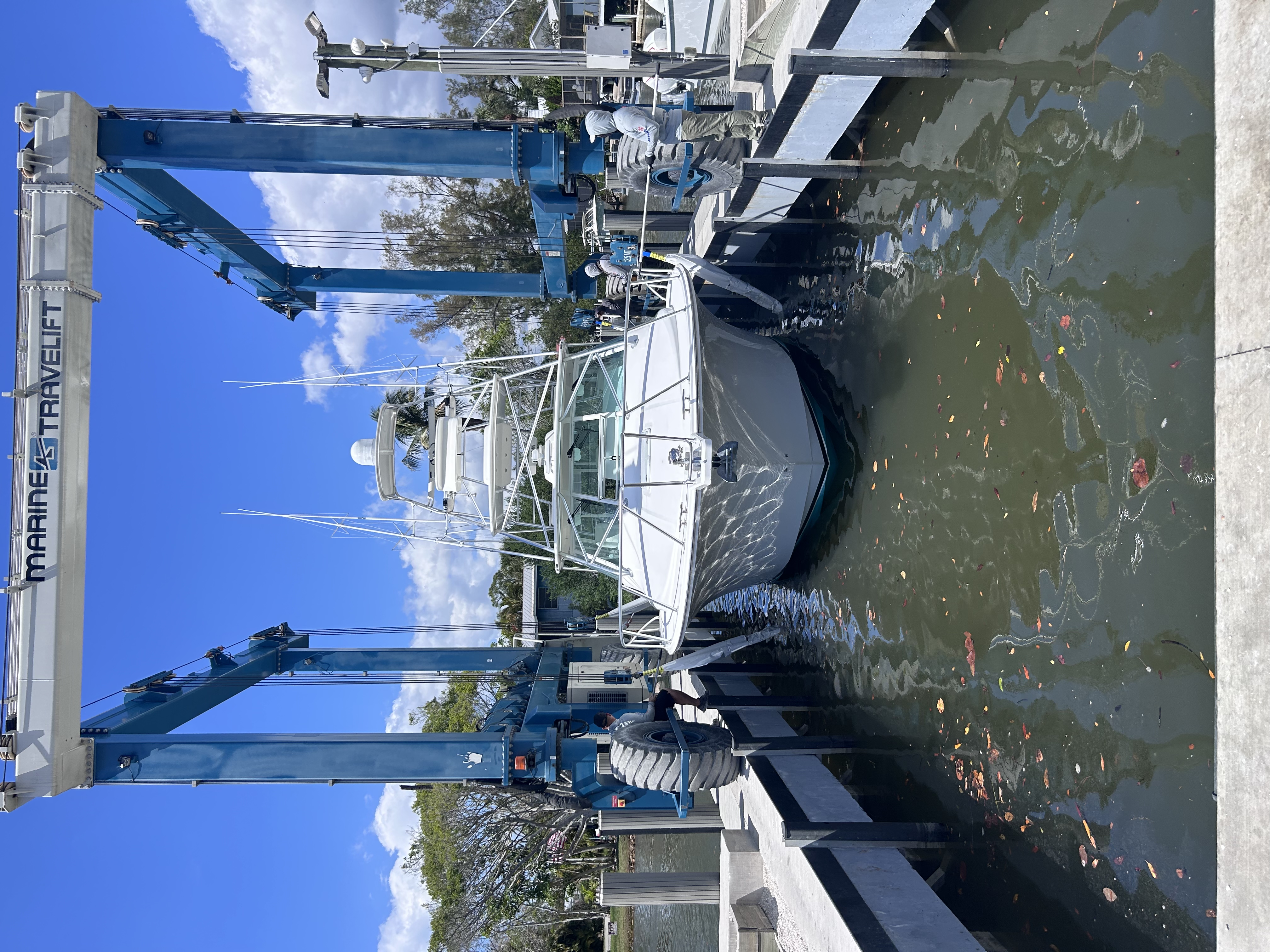
A qualified surveyor establishes the condition of the vessel: hull and structure, systems, safety equipment, electrical, plumbing, steering, tankage, and the condition of surfaces and fittings. Usually includes a haul-out so the underbody, running gear and through-hulls can be examined out of the water.
What it cannot do. It does not open engines. It is not a mechanical assessment, and a general surveyor will say so in the report. It cannot tell you how a system behaves over weeks. And it cannot find an intermittent fault that does not happen to occur that day.
The sea trial
The boat is run under load, in the water, with the buyer and usually the surveyor aboard. Instruments are recorded, systems are exercised under way, and the vessel's actual behaviour is observed.
What it cannot do. It is a short run in whatever conditions exist that morning. It does not answer questions the sea state refuses to raise, and it cannot establish anything about durability.
The mechanical or engine survey
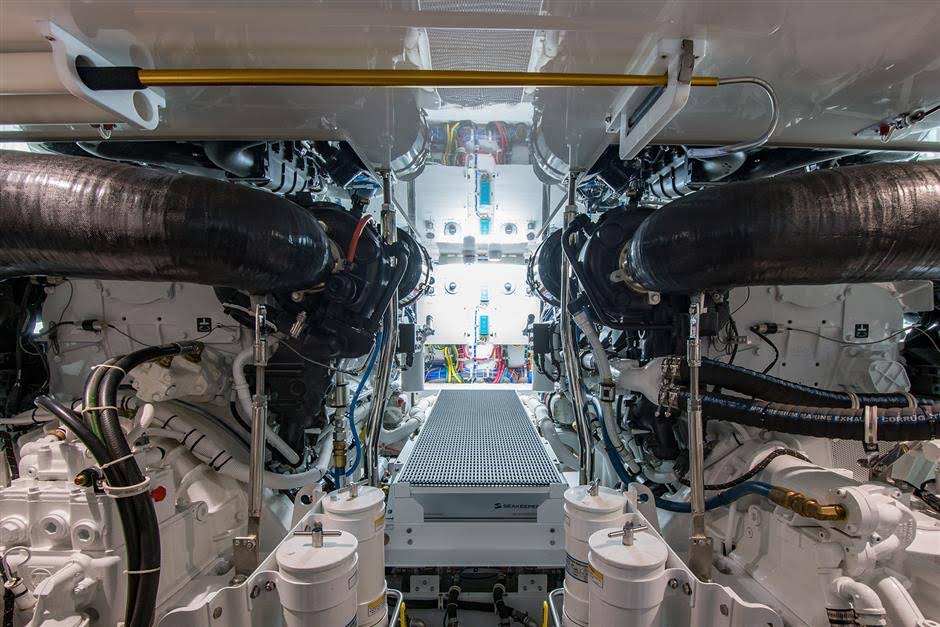
A separate specialist assesses the power plant and drivetrain: engine and gear condition, ECU data and fault history, hours against service records, oil analysis, borescope inspection where warranted, and generator and auxiliary systems.
What it cannot do. It is focused on machinery. It is not evaluating the hull, the structure or the finish, and it is not a substitute for a general survey.
Key Takeaway
On a boat of meaningful value, engage all three. The general surveyor will tell you the mechanical assessment is outside their scope — that is not a disclaimer to skim past, it is a direction.
A Sea Trial Is Not a Test Drive
This surprises nearly every first-time buyer, and it changes how the whole process should be approached.
On a brokered vessel you generally do not get to run the boat before deciding. You get a showing at the dock, and then you ride the boat on survey day — after you are under contract, with a deposit at risk. Pre-purchase demo rides happen only when a seller specifically permits one, and they are the exception rather than the norm.
Buyer Beware
The sea trial is not the step where you decide whether you want the boat. It is the step where you verify the boat you already committed to conditionally. That is why the contract preceding it matters so much, and why a compressed acceptance window is a serious problem rather than a scheduling inconvenience. The contingency period is the only thing standing between a conditional commitment and an unconditional one.
Running the Trial Properly
The recorded figures
The surveyor's trial run captures the numbers, and they should be compared against the manufacturer's published figures for that model and power package rather than assessed in isolation.
RPM achieved against rated maximum. Speed at defined RPM points. Fuel burn. Temperatures. Engine synchronisation. Transmission engagement in both directions. Steering and hydraulics. Electronics and autopilot under way. Generator and air conditioning under load. Anchoring gear.
A boat that will not reach rated RPM has a problem — fouling, propeller pitch, fuel delivery, or something worse. It is one of the more common findings and one of the more consequential.
What I read as a captain
The instruments tell you part of it. The rest is what the boat tells you, and it is where a broker who runs boats is worth something different from one who does not.
I take her through the whole range — speeds, RPM, trim — and attend to four things.
Sound. Engines tell you about themselves if you let them.
Entry. Whether she lands hard or soft, and what that says about hull form under real load.
Response. Whether she answers the input you give her.
Lag. The delay between what you tell her to do and what she does. That is the one most buyers would never think to check, and the one they would feel on a bad boat for years without being able to name.
Go looking for conditions
If the day is flat, a sea trial answers very little about how the boat rides. So I find traffic and cross the wake deliberately.
What I am reading: where she lands, whether she recovers on one impact or keeps working, what the helm does through it, hull noise, and whether anything shifts, rattles or bangs below.
Spray is worth testing on purpose too — head, quartering, beam and following, and with whoever normally rides in the cockpit actually sitting in the cockpit rather than in the shelter of the helm.
Federico Perspective
When conditions will not answer a question, the honest entry is "not tested." Never "fine." A diligence record full of "fine" is worth nothing, because you cannot tell afterward which items were verified and which were merely unchallenged. Write down what you could not test and carry it into the decision as an open item.
The Mechanical Inspection Earns Its Cost Here
The general survey establishes that the engines ran. The mechanical survey establishes what condition they are in.
ECU data and fault history is often the most valuable single output. It records events that did not happen to occur on survey day.
Oil analysis is a screening tool and it must be read as one. On a purchase I handled, a sample came back with elevated iron and lead — which reads alarmingly. The assessment was thin rust on liner walls from the boat sitting, plus solder leaching from an oil cooler, with a recommendation to resample after a set number of running hours. That was correct, and the deal proceeded. A single sample from a boat that has been sitting is a starting point, not a verdict.
Borescope inspection where age, hours or findings warrant it.
Hours against records. Not the hour meter alone, but whether the documented service pattern matches the hours claimed.
Key Takeaway
The mechanical survey is where intermittent and latent problems have the best chance of surfacing, because it is the only one of the three engagements looking at stored data rather than at a single day's behaviour.
Where the Gaps Actually Are
Three specific blind spots are worth knowing about, because each one has cost buyers money.
Intermittent faults. A fault that occurs once during a trial and does not repeat is not reassuring — it is the definition of the hardest category to size. On one purchase, a control alarm was logged during the trial with a recommendation to troubleshoot and replace as needed. After closing it would not clear, and the cause was the ECU and a connector. The survey caught it. What it could not do was tell anyone how big it was.
Systems that only fail under sustained use. Air conditioning, refrigeration, watermakers, inverters and chargers may behave perfectly for two hours and poorly over a weekend.
Anything the conditions did not test. Rough-water behaviour, wet ride, how she handles a following sea, docking in wind. If the day was calm, those are open questions, not answered ones.
Who Should Be There
You should.
Be at the haul-out. Be on the sea trial. A report read three days later is a summary of a day you should have witnessed, and a finding that takes a paragraph to explain in writing takes ten seconds when the surveyor can point at the thing.
Sequencing and Cost
Ordinarily the general survey, haul-out and sea trial happen on the same day, with the mechanical survey either alongside or immediately after. That is efficient and it is also why buyers experience them as one event.
Budget for three engagements, not one. The combined cost is meaningful and it is trivial against the transaction, and against the cost of discovering after closing that nobody was looking at the thing that failed.
Key Takeaway
The point of running three inspections is not thoroughness for its own sake. It is that each one is designed to find a different class of problem, and the gaps between them are where expensive surprises live.
A note on sources: examples are drawn from transactions I have handled; clients, sellers and surveyors are not identified. Nothing here constitutes engineering or survey advice, and this brief is not a substitute for engaging accredited professionals for each inspection.
Buying? A Private Yacht Search includes building and managing the diligence plan, not just scheduling it.
For how to actually read what a survey produces, see Understanding Yacht Surveys.
Federico Yachts · Yacht Intelligence. Personal Representation. · captain@federicoyachts.com · +1 (239) 330-2505 · FedericoYachts.com
Private Yacht Advisory
Make the Next Decision With Better Information.
Whether you're buying, selling or evaluating your next move, Federico Yachts brings transaction experience, market intelligence and hands-on vessel knowledge to the decision.